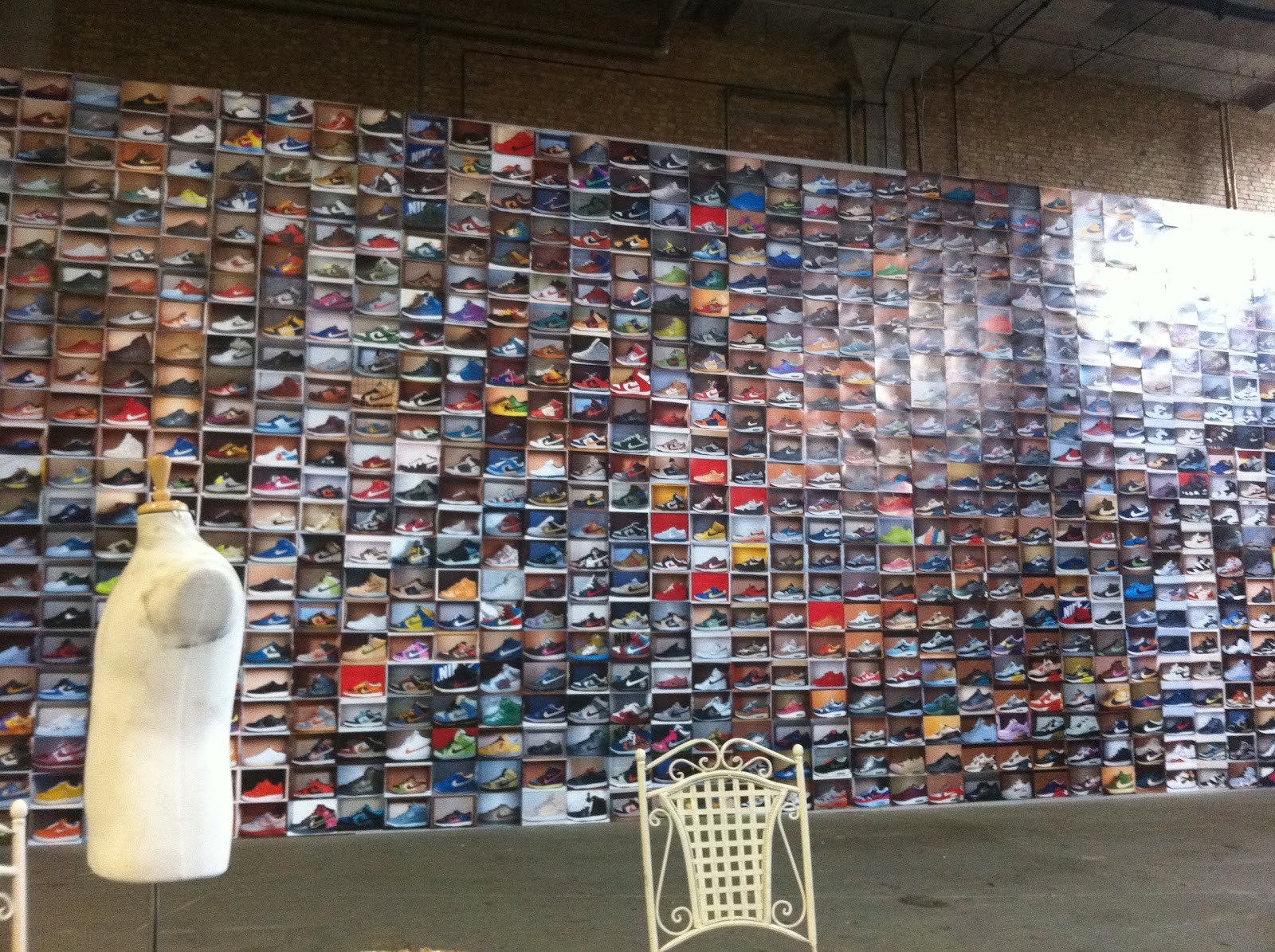
It has been a decade since Nike first explored the potential of reworking their classic silhouettes by inviting artists to freelance with them on a specific sneaker. The "sneakerhead" culture of the early 2000's would dictate the direction that Nike would take when selecting their artist. With Michael Jordan in his swansong, it was the first time that the attraction of indie art and the exclusivity surrounding it was made commercially available. The creation of sneaker boutiques embodied and empowered this new scene. For Nike to make a success of this new and previously closed world, an artist series release was conceived with Brooklyn-native Josh Franklin a.k.a Stash. The rest is history. Many may remember Stash's Nike Air Classic BW, with a release limited to 1000 individually numbered pairs but it was just a single step in a legacy defining series. The Air Force 1 High and Mid were not exempt from a radical re-hauling and nor was the Air Force 1 low and Air Max 95 that constituted the infamous Blue Pack of 2003. But it was no fairytale ending for Stash and his collaboration with Nike. In recent history the relationship between the two has been askew and ultimately soured. Some feel that it's a bit ridiculous, especially considering Nike took Stash from an underground pioneer to a household name. It also must be remembered that Stash, through his revitalizing of old classics with visionary touches of flair, may have proved to Nike that it's the collaborator who truly makes the shoes. Inevitably its hard not to hold the opinion that Stash saw himself and his name to be more important than the artistic creation and its canvass. Naturally you may understand how this might not have sat well with Nike, for nothing is bigger and more important than the Nike Swoosh and the sneaker that it's on.
I so return to my original question. Where does that leave us now? Ostensibly the template has not drastically changed. Nike has since courted many of the worlds best underground and street artists post 2002 who have all tried to emulate the success of Stash, for better or for worse. For those less familiar with who these artists may be here is a selected few:
Unkle/Futura 2000
Hiroshi Fujiwara
Skulls of Saigon
Ketsuya Terada
Claw Money
Gasius
Haze

These and many more artists like them will be continually approached by Nike for years to come. What all of them have proved is there's an insatiable hunger in the sneaker community for these products. They not only respect these collaborations for successfully combining multiple aspects of street culture, but for this exact reason the collaborations act as an important documentation of the ever changing face of street culture. As Nike knows all too well, this is what people are desperate to be a part of by having to buy a part of it before it disappears and exists only in memory.
For the foreseeable future, this is an unchanging formula for Nike. it's been tried and tested for a decade and is showing no signs of loosing any of the excitement, hype and desire that was first generated by Stash's legacy defining shoes. Baring this in mind, Nike are not finished experimenting with the subject of art and artists. The Tom Sachs Mars Space Program with the Nike Mars Yard Shoe is a case in point. Much of the DNA is the same - a release number of a couple of hundred, use of bespoke materials and innovative design techniques as well as the successful marriage of brand identity with the artist's signature style. The difference is in the story of the shoe. No longer is it an older model getting another facelift but an entirely new creation, purpose built by the artist as an artistic extension of his practice and ideology. The consumers' needs are trivial. This is a hugely conceptual leap for what on the face of things is an all singing all dancing sports company. Or is it?
The tone of the Mars Yard shoe has shifted. It would seem nearer to being a bonafide art work than any Nike creation to this date. That's not from its appearance but from its purpose in the conceptual installation and performance of Tom Sachs' artwork. However, even though the appearance of the shoe is radically different from past Nike models, its functionally exactly the same. It's still a fully functional shoe. The fact that 200 pairs were made commercially available encouraged the consumer to buy into the product in an attempt to try to buy into the artwork itself. The reality was by buying a pair, you were buying a replica of the artwork rather than the genuine article. You were buying into the idea that with these shoes you too would be able to discover, mimic and experience what Tom Sachs' Mars Space Program was actually like. If all of a sudden this seems surprisingly similar then this might be why:
All that has happened is Nike are replacing the sporting achievements of a global sports star with the artistic achievements of a world famous artist. Both feats are unachievable by the average person on the street but they may get a bit closer to achieving such greatness by buying the respective shoes. It is nothing short of genius.
This recycling and disguising of past ideas doesn't have to be limited to Nike's own. In 1975 Hervé Poulain invited his friend Alexander Calder to design a
car that married artistic excellence to 'an already perfect object' creating what would be the first of a prestigious collection of BMW Art Cars. Since
then some of the greatest names in contemporary art have added to the
collection creating a wide range of artistic interpretations.


Before you cry out in dismay saying this is exactly what Nike have already done with their artist series, you are not entirely wrong. However, what this also represents is the means by which Nike can increase its share in a market previously closed to it. Keeping an open mind, there is only one significant difference between a BMW car and an AF1 - it's cost. Other than that they are remarkably similar. They are both highly functional. They are already the perfect object, a design classic. In fact the designing of shoes and cars are virtually the same. The design is never radically re-hauled and reinvented but simply tailored and tweaked to get that increased bit of performance. After
all the AF1 is unchanged for 30 years and can still perform with the
best of today's offering on the hardwood courts of NBA arenas. The same
can be said with BMW's M series'. Cosmetic changes over the years have
reflected the changes in taste and fashion but underneath the bonnet and
bodywork its still the same mechanics and construction.
As the price would suggest, a BMW car is a luxury item. In stating the obvious, Nike has yet to break into this luxury market. But if it were, it doesn't have to do so by matching the BMW in charging astronomical prices, it rather has to prove to the luxury market that the AF1 is perfect. Perfection or accredited perfection is what drives the luxury market. Even in our economically difficult times, the only bubble not to completely burst is the art bubble. All Nike need to do is get Yayoi Kusama, Daniel Buren, Hans Haake, Chris Ofili or any of the YBA's (the list is endless) to do to the AF1 what a previous generation of artists have done to the BMW art car. Arguably there isn't a better seal of grandeur, decadence and achievement to have a universally acclaimed artist pay homage to a design by decorating in whatever way they deem fit.
Contrary to the eclectic names of artists suggested for Nike to collaborate with, a little more care and thought would be needed in successfully matching artist with medium. What little brief there might be for such a collaboration would simply enforce the AF1 to remain true to its original design in that it would still have to function as a shoe. The likes of Hans Haacke would be more suited to the artistic challenges of projects such as this - http://www.nike78.co.uk/. In the name of an artist series this is by far the greatest and most dangerous step that Nike have made yet. All their previous methods for collaboration have never allowed for the object desire and functionality of the shoe to be lost. Nike 78 is taking shoes into a realm that the majority of Nike faithfuls may not desire to go. The shoe has finally become something unrecognizable. It has been made impotent for functioning in the real world. It has become the subject and property of art and art alone. Nike have truly embarked upon exploring the new world.